The Cranio-Cervical Spine and Breastfeeding: Why How the Baby is Held Matters
Why the way a baby is held at the breast matters
When Dr Robyn Thompson watched babies feed during her in-home breastfeeding service work, she noticed that many were reacting to the way they were being put to the breast, whether by the mother or by someone helping her. In this video she explains what she saw, why the cranio-cervical spine matters, and what to do instead.
The main points, in Dr Robyn's words
What she observed
- At the start of each session with 653 women, Dr Robyn asked each mother to demonstrate how she had been taught to breastfeed. Eighty-five percent showed the cross-cradle technique.
- She describes the cranio-cervical spine and the intraoral cavity as closely connected, so what happens at the neck affects what the baby can do with its mouth.
- She notes that the cross-cradle technique has only been taught widely over roughly the last 40 years.
What restricting the cranio-cervical spine does
- Dr Robyn describes pressure at the base of the neck as able to set off the Moro reflex in the baby.
- She explains that restricting the atlas and axis stops the baby turning its head. The baby then cannot seek, find, smell, taste and touch its way to the nipple.
- She describes fingers either side of the occipital bone as restricting the baby, because the cerebellum underneath is connected to the motor skills the baby needs for feeding.
- When practitioners stopped doing this, she saw a marked difference. Babies located the breast and went to it on their own, without interference.
Curious how your own practice compares? Take the free 5-minute assessment. Choose your pathway and start here.
What happens when the baby is forced on
- With the cross-cradle technique, the practitioner or mother holds the baby's head, compresses the breast to direct the nipple towards the baby's nose, waits for a wide-open mouth, and then brings the baby on.
- Dr Robyn's concern is that this restricts the baby's head and holds the baby's body firmly against the adult's. The baby has little power to do what it needs to do.
- She says that when breast tissue is forced into the mouth, the baby is not using its own vacuum system to draw the breast in. The baby is suddenly working out what to do with a mouthful of tissue.
- The mothers in her research described it as awkward, feeling funny, and not feeling right.
What to do instead
- Step back, watch and learn what women and babies can do well on their own.
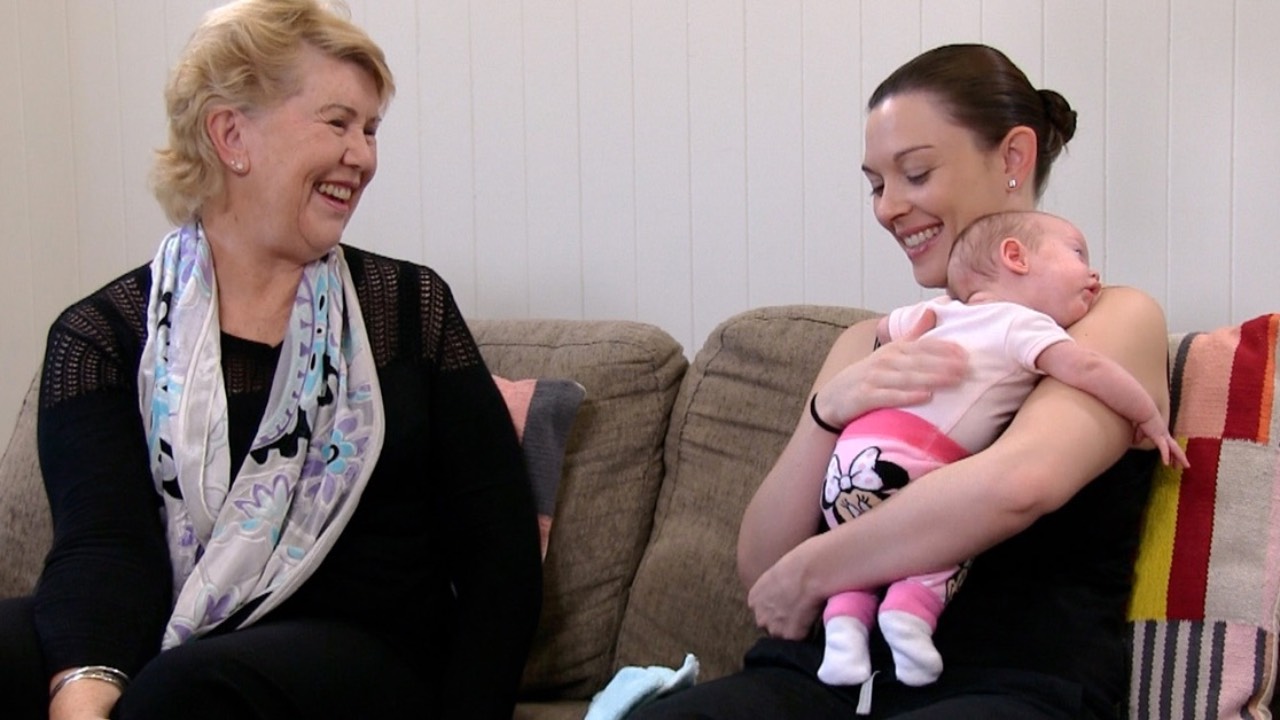
- Where a mother does need help, Dr Robyn asks that it be gentle, respectful and calm. That means no noise and no crowd in the room, just the mother and you quietly working it out together.
- Avoid interfering with the cranio-cervical spine. Encourage the baby to use its own intraoral cavity, and support the mother to do what she knows how to do.
- She links this to symmetrical face-to-breast contact and to why the nipple should not be directed to the nose. That is covered in a later session.
What the research says
Dr Robyn's observations connect to a peer-reviewed study of 653 maternal and infant records from an in-home breastfeeding service in Melbourne. Nipple trauma was the most common presenting complication, at 62.9 percent. The cross-cradle technique was one of four statistically significant predictors of nipple trauma (adjusted odds ratio 1.90, 95 percent confidence interval 1.03 to 3.50). The authors recommend changes to first and early breastfeeding techniques.
Thompson R, Kruske S, Barclay L, Linden K, Gao Y, Kildea S. Potential predictors of nipple trauma from an in-home breastfeeding programme: a cross-sectional study. Women and Birth. 2016;29:336 to 344.
Where to go next
If you have not watched them yet, start with the overview of the Thompson Method for health professionals, then the 3 Golden Hours. Then see how the Breastfeeding Academy teaches the full approach.